0110 - Balanced Binary Tree (Easy)
Problem Link
https://leetcode.com/problems/balanced-binary-tree/
Problem Statement
Given a binary tree, determine if it is height-balanced.
For this problem, a height-balanced binary tree is defined as:
a binary tree in which the left and right subtrees of every node differ in height by no more than 1.
Example 1:
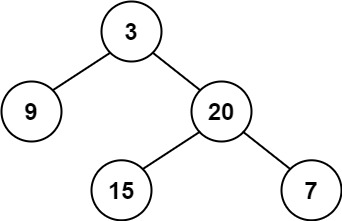
Input: root = [3,9,20,null,null,15,7]
Output: true
Example 2:
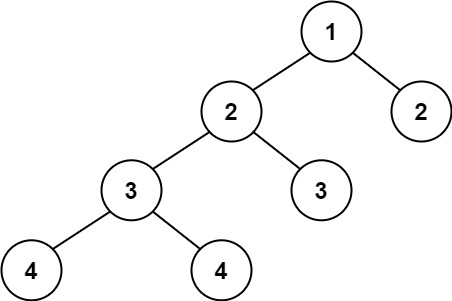
Input: root = [1,2,2,3,3,null,null,4,4]
Output: false
Example 3:
Input: root = []
Output: true
Constraints:
- The number of nodes in the tree is in the range
[0, 5000]. -10^4 <= Node.val <= 10^4
Visualization


Approach 1: Straight forward - Recursion
This solution is strictly following the definition of a balanced binary tree.
-
(1) ABS(left sub-tree's height - right sub-tree's height) .
-
(2) Every left sub-trees and right sub-trees are also balanced.
First, we need to set up the base case for the recursion solution. Then we check if the whole left subtree and right subtree are balanced. If so, then we check if every subtrees are balanced.
Time Complexity: as recursively we are going to have to process each node inside the tree at least once using a depth-first approach.
Space Complexity: as using a recursive DFS solution will only ever hold the current path inside our call stack, which will scale with the height of the tree.
class Solution {
    public boolean isBalanced(TreeNode root) {
        if (root == null) {
            return true;
        }
        if(Math.abs(height(root.left) - height(root.right)) <= 1){
            return isBalanced(root.left) && isBalanced(root.right);
        } else {
            return false;
        }
    }

    public int height(TreeNode root){
        if (root == null) return -1;
        int ld = height(root.left);
        int rd = height(root.right);
        return 1 + Math.max(ld,rd);
    }
}